
What robots already do in this field, and what you can do next: for your work, for your child, and for the community.
Robots at work here
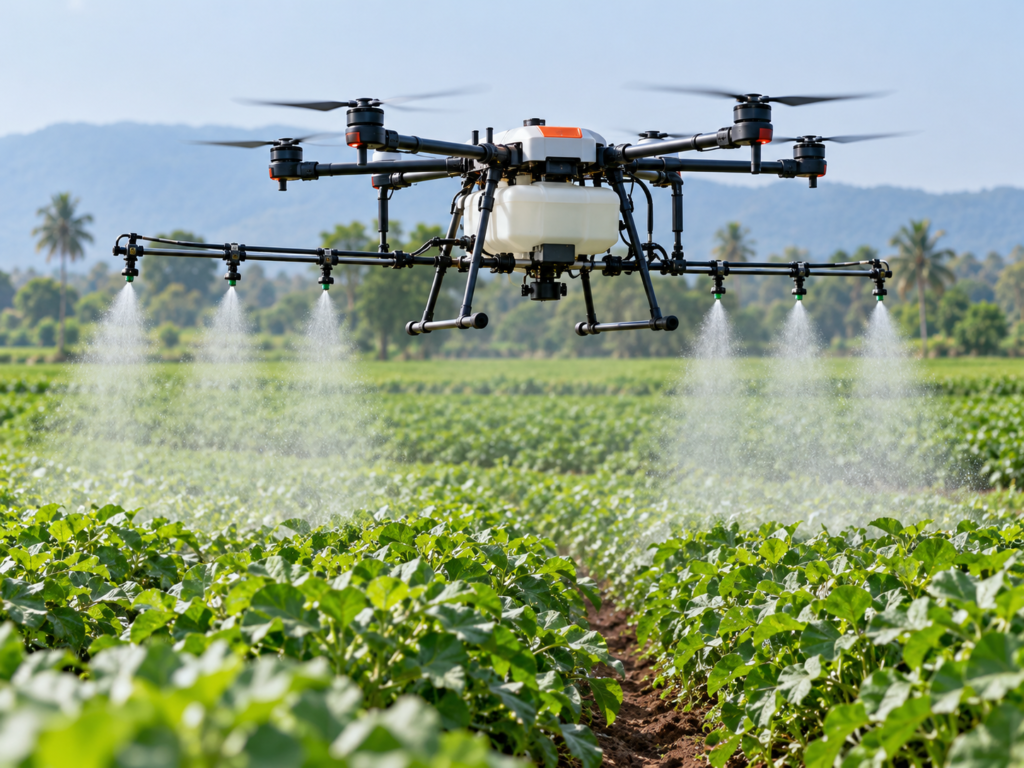
Drone sprayers
Summary: Drones that spray crops from the air, covering a field in minutes with less chemical, less water and no contact for the worker.
Details: They fly a planned route over the field and spray pesticide, fertiliser or nutrients evenly. They suit paddy, cotton, sugarcane and orchards, and reach crops that are hard to walk through. Pilots need training and a registered drone under the national drone rules.
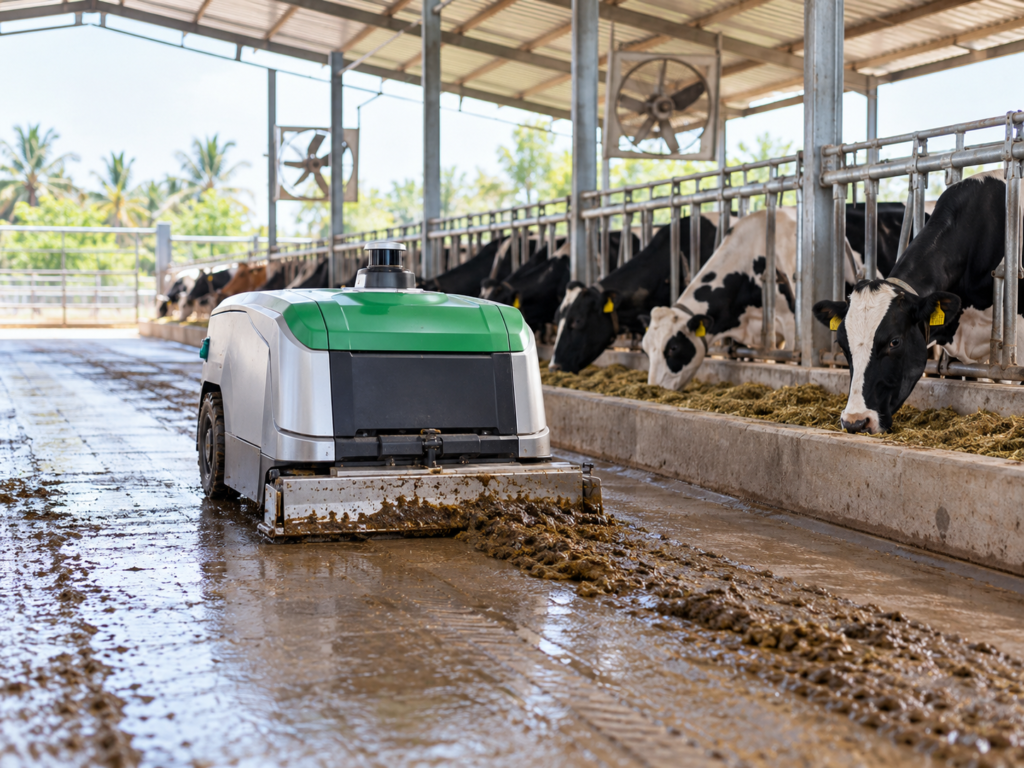
Shed-cleaning robots
Summary: Robots that scrape and clean dairy and cattle sheds on a schedule, keeping floors dry and animals healthier.
Details: They move slowly along the shed floor, pushing dung into the drain or pit several times a day. A cleaner floor means fewer hoof problems and less infection, and saves daily labour. Some models also spray water or bedding material.
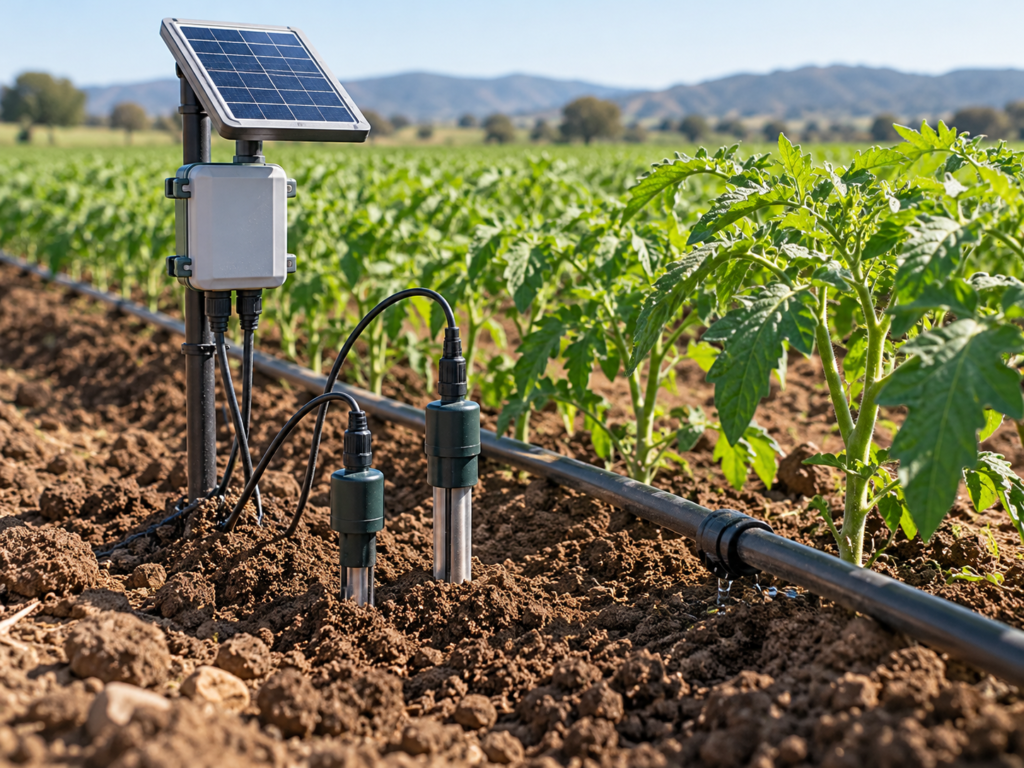
Soil and water sensors
Summary: Field sensors that measure soil moisture, nutrients and water levels and send readings to your phone.
Details: Placed in the field or the water source, they report moisture, temperature, salinity or tank and canal levels. Farmers use the readings to water only when needed and to plan fertiliser. They’re often the first, lowest-cost step into smart farming.
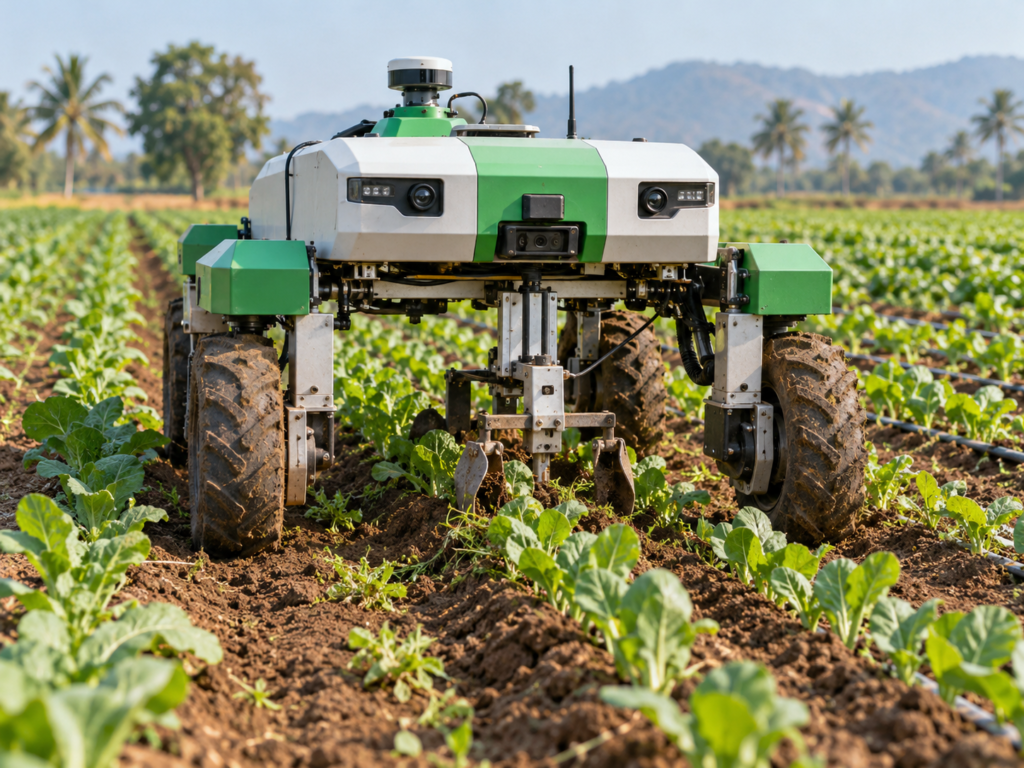
Weeding robots
Summary: Ground robots that find weeds with cameras and remove them mechanically or with a tiny spot of herbicide.
Details: They move along crop rows, tell weeds from crops, and pull, cut or spot-spray only the weeds. This cuts herbicide use and the hours of hand weeding. They work best in row crops such as vegetables, cotton and maize.
Share the robot you use on your farm or dairy, or tell us what you need.
Nothing here yet. Be the first to post.