
What robots already do in this field, and what you can do next: for your work, for your child, and for the community.
Robots at work here
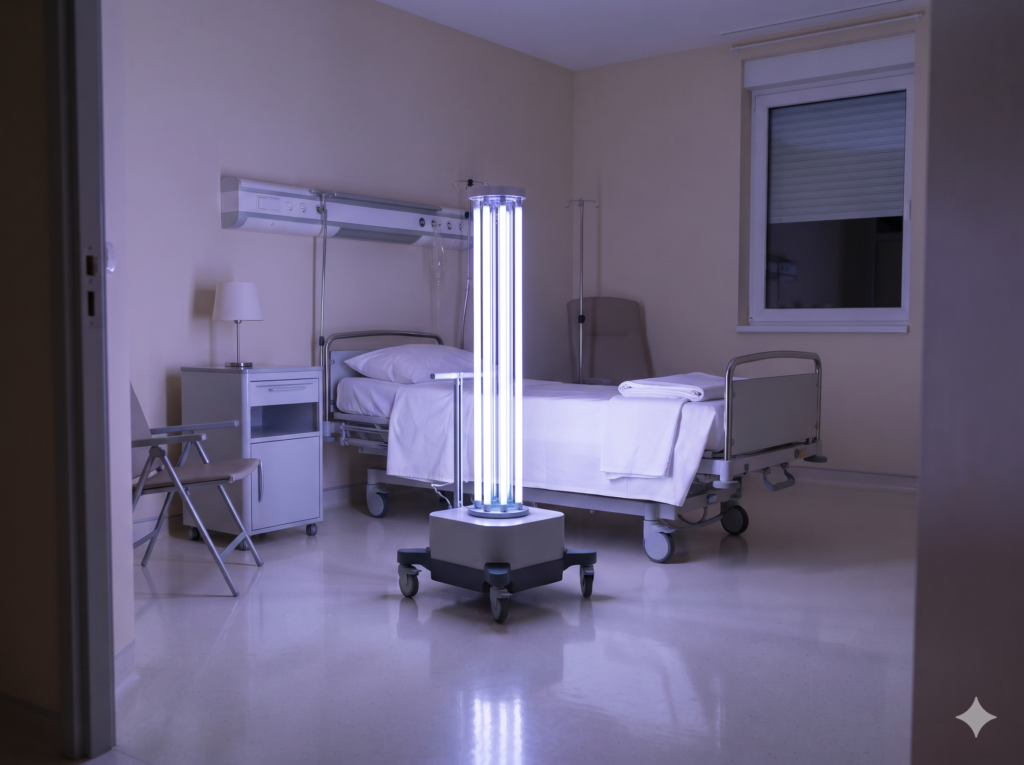
Disinfection robots
Robots that clean rooms with UV-C light or disinfectant mist, killing germs in minutes without exposing cleaning staff.
They move into an empty ward, operating theatre or ICU and treat every surface, including corners that hand cleaning misses, which helps cut hospital infections. UV-C light harms skin and eyes, so the room must be empty and the robot stops if someone walks in. Operators are trained and follow the hospital's safety rules.
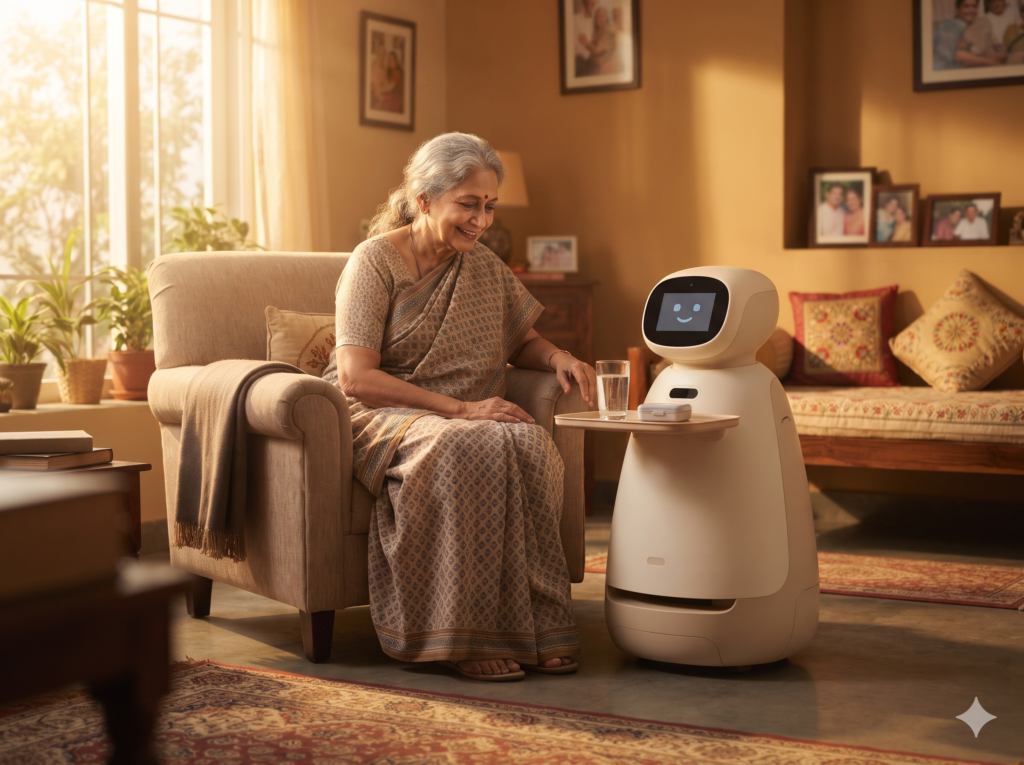
Elder-care and patient-assist robots
Robots that help lift and move patients, remind people about medicines and keep elderly people safe and connected at home.
Lifting robots move a patient from bed to wheelchair without straining thecaregiver's back. Home robots give medicine and water reminders, detect falls and call family or a doctor in an emergency. They support caregivers rather than replace them, and families should check the camera and data privacy settings
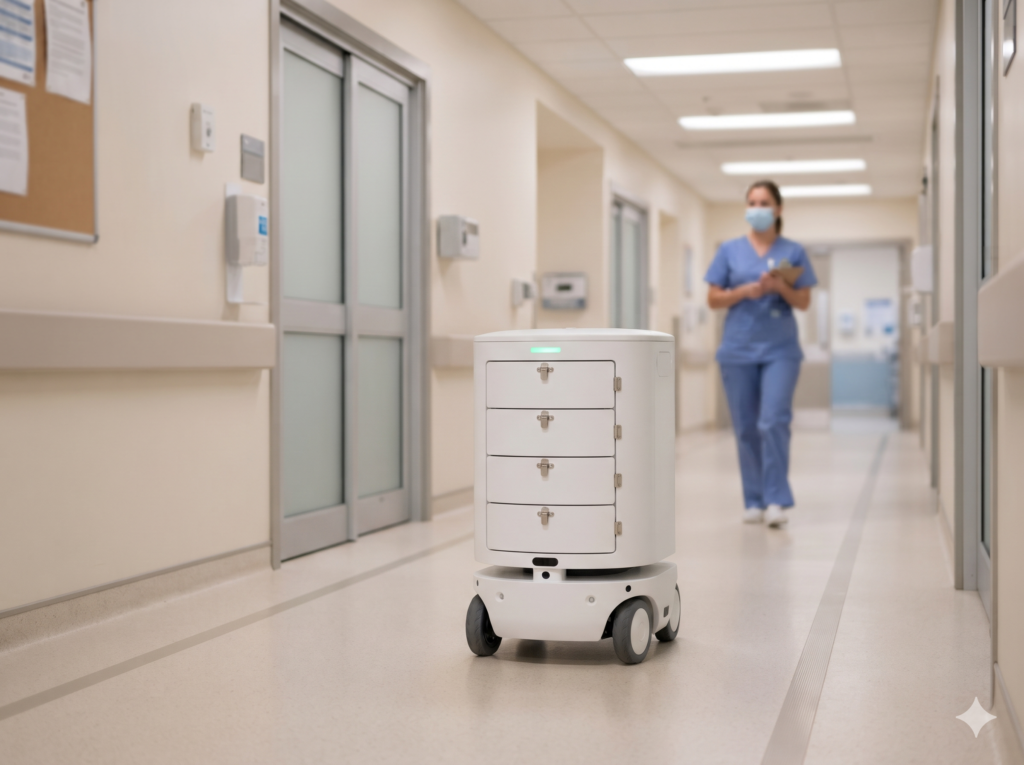
Hospital delivery robots
Self-driving carts that carry medicines, samples, meals and linen around the hospital, so nurses spend more time with patients.
They map the building, ride lifts, pass through doors and avoid people, and their compartments lock so only authorised staff can open them. They suit large hospitals with long corridors and busy night shifts. Staff need only short training, and the hospital sets the routes and access codes.
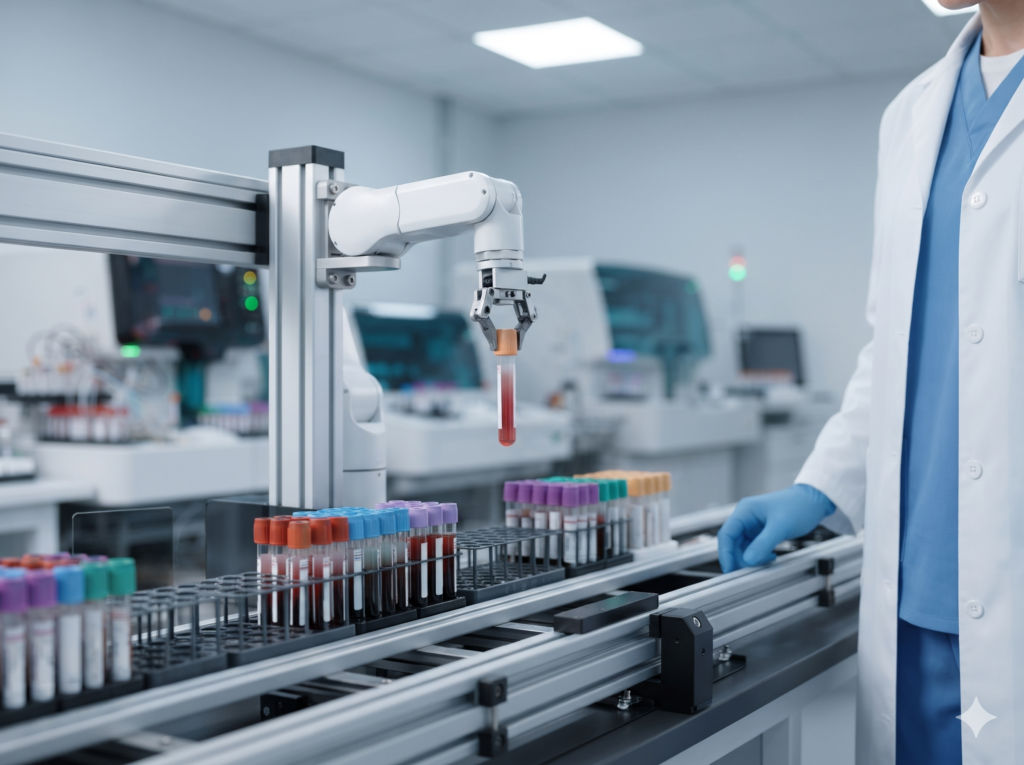
Lab automation robots
Robot arms and conveyor lines that sort, test and track thousands of blood and urine samples a day, giving faster and more accurate reports.
Barcoded tubes are opened, spun, measured into analysers and stored without anyone touching them, which also protects lab staff from infection. Pipetting robots speed up research and PCR testing. Labs need trained technicians and follow quality accreditation rules.
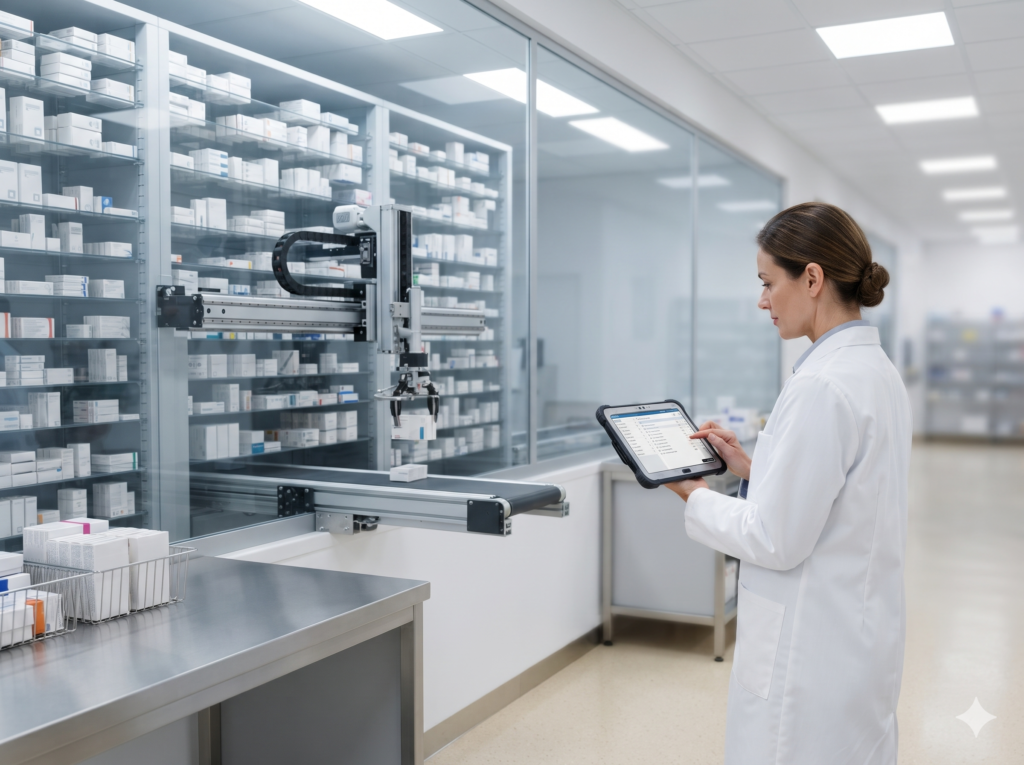
Pharmacy robots
Automated systems that store, pick and pack medicines exactly as prescribed, cutting dispensing errors and waiting time.
They read the prescription, pick the right strip or vial by barcode, and track stock and expiry dates automatically. Some prepare exact doses of chemotherapy or IV medicines inside sealed cabinets, keeping staff safe. They are used in hospital pharmacies and large chemists, and a licensed pharmacist still checks and supervises every order.
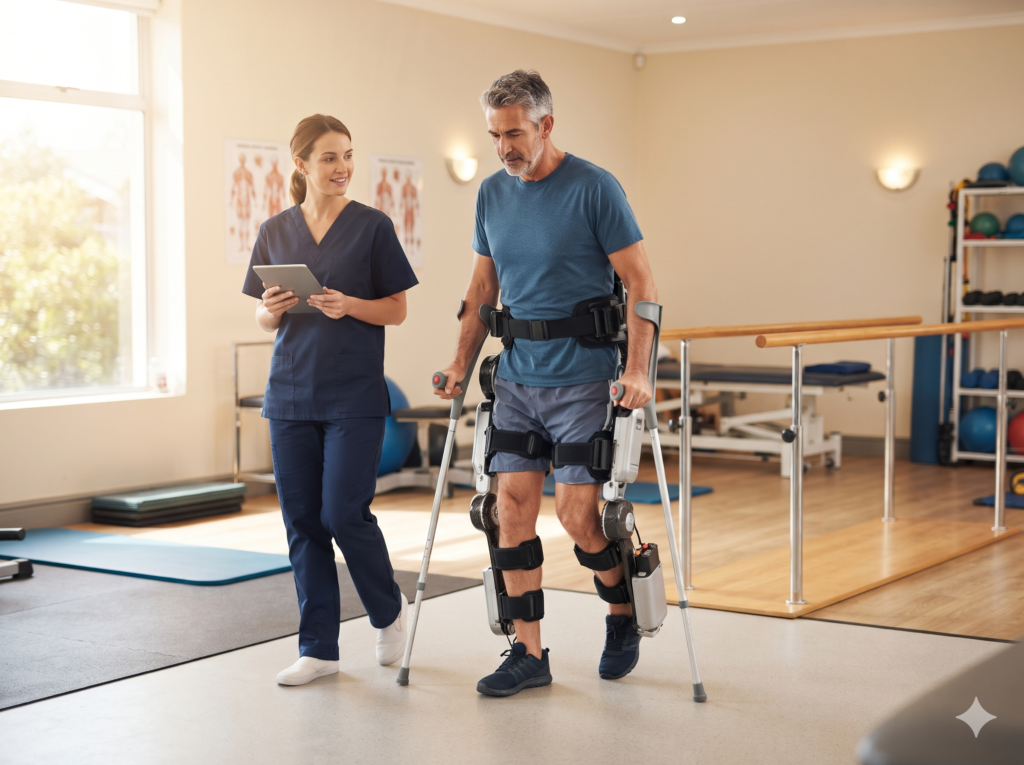
Rehabilitation robots
Wearable frames and guided machines that help patients walk, move their arms and regain strength after a stroke, accident or surgery.
They guide a weak arm or leg through the correct movement hundreds of times a session and record progress for the therapist. Physiotherapy centres use them for stroke,
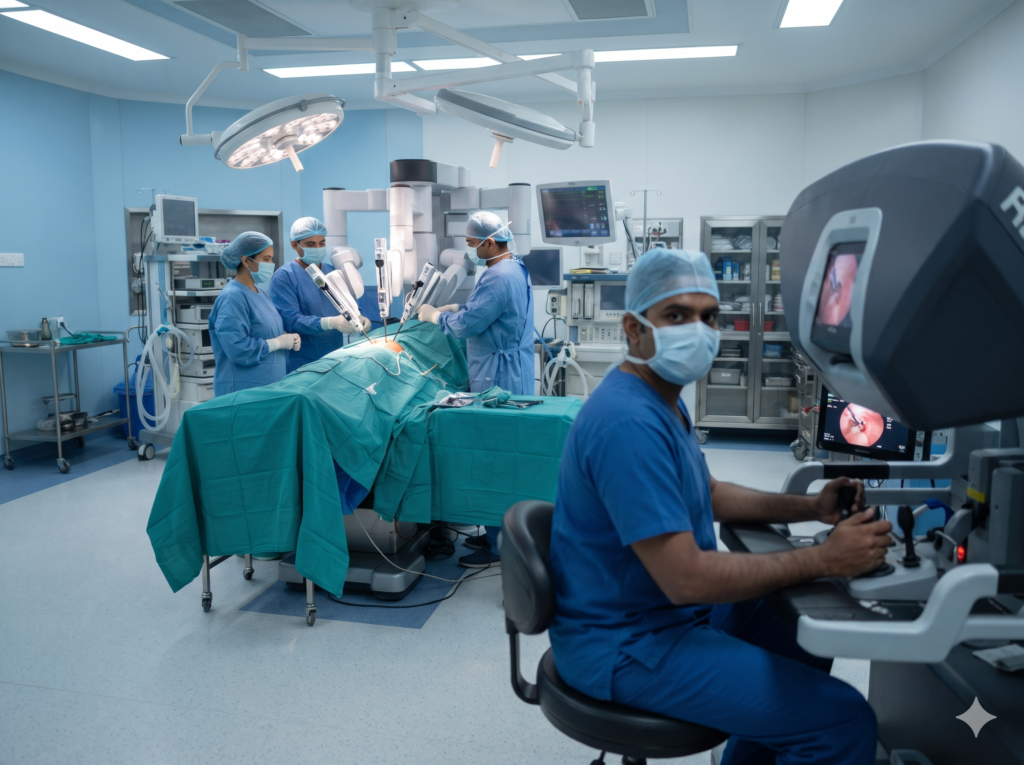
Surgical robots
Robot arms that a surgeon controls from a console, making small, steady cuts so patients lose less blood, feel less pain and go home sooner
The surgeon sits at a console with a magnified 3D view, and the robot's arms copy the hand movements through tiny openings while filtering out any hand tremor. They are used in urology, gynaecology, cancer, heart and joint-replacement surgery. Surgeons need special training and certification, and the system must be an approved medical device
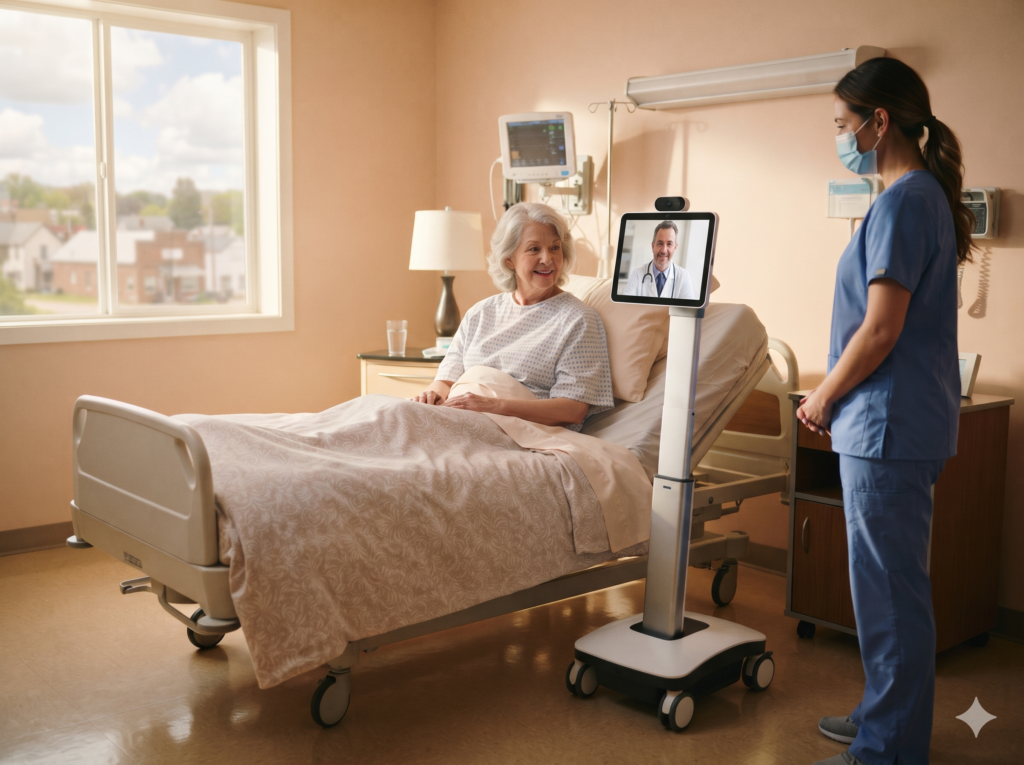
Telepresence robots
Robots with a screen and camera that let a specialist in another city see, talk to and examine patients from far away.
The doctor drives the robot to the bedside over the internet, and connected tools such as a digital stethoscope or exam camera share readings live. They help rural hospitals, ICUs at night and isolation wards get specialist care quickly. They need a steady internet link and follow national telemedicine guidelines.
Share the robot you use in your hospital, clinic, lab or care home, or tell us what you need.